The Dawn of Student Sovereignty: The Pioneers and Evolution of the Dow Medical College Students’ Union (DMCSU)
The Dow Medical College Students’ Union (DMCSU) has a rich legacy as a central pillar of student life, culture, and political consciousness. However, the fully autonomous, democratically elected student body that defined Dow’s later years was not established overnight. The transformation of the DMCSU from a faculty-supervised committee in 1945 into a sovereign student organization governed by its own constitution in 1953 is a remarkable journey of evolving student rights.
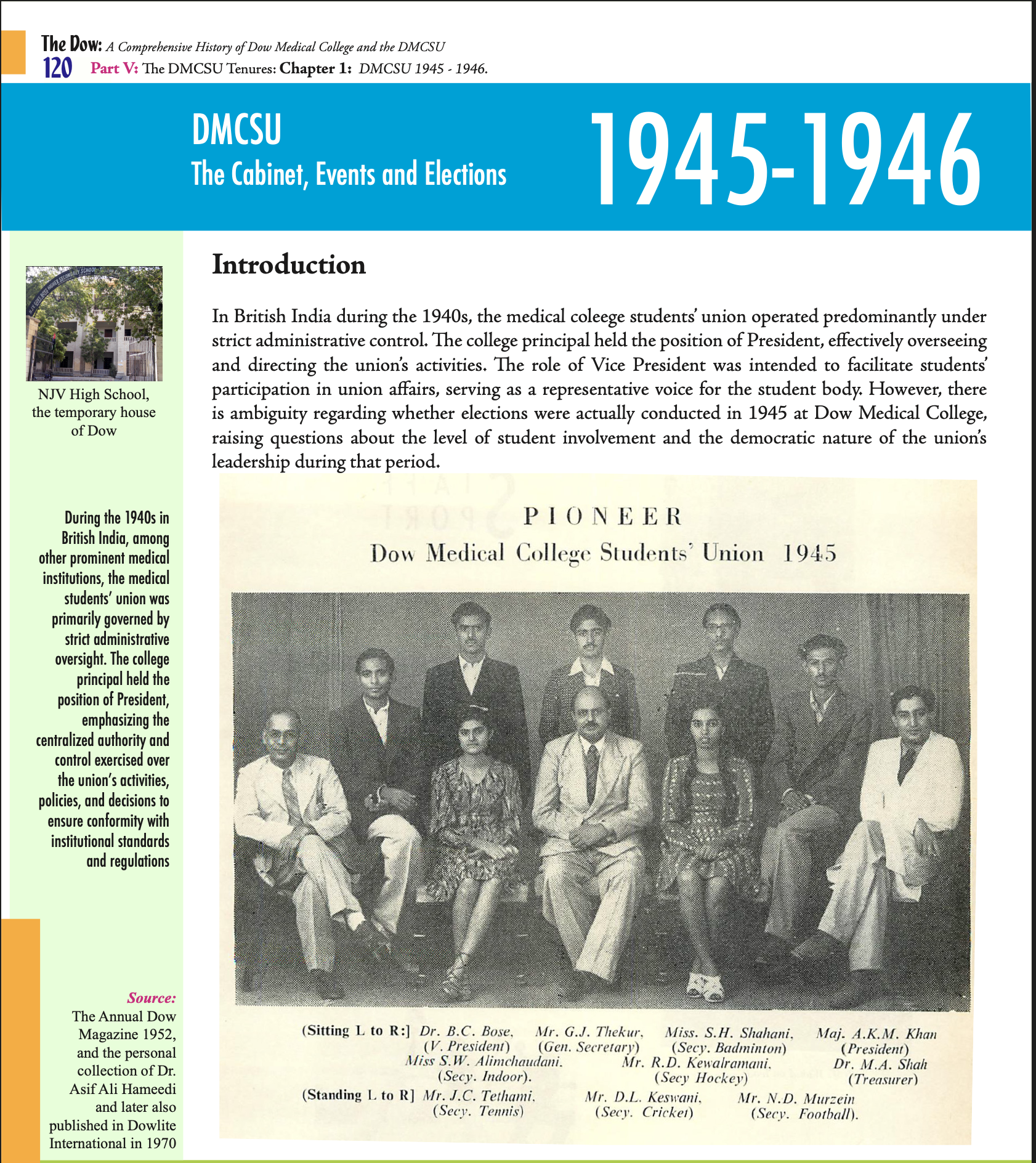
The Pioneers: The 1945–1946 DMCSU Cabinet
During the inaugural years of Dow Medical College in British India, the students’ union operated with limited autonomy and functioned directly under the supervision of the college administration. The primary objectives of this early union were to promote student welfare, organize sports and social events, and represent basic student concerns. Before the existence of a written constitution, the union relied entirely on establishing “healthy traditions” of discipline, unity, and a friendly, democratic outlook to maintain order.
In the pioneer cabinet of 1945-1946, the top leadership roles were occupied by the faculty rather than the students. The structural makeup of this first cabinet included:
- President: Major A. K. M. Khan (The Principal). He acted as the chief representative of the student body, presiding over meetings and supervising all union activities.
- Vice President: Dr. B. C. Bose. A faculty member who assisted the President in administrative affairs and supported student initiatives.
- Treasurer: Dr. Mehmud Ali Shah. Also a faculty member, he was responsible for managing union funds and overseeing event expenditures.
- General Secretary: Mr. G. J. Thekur. He was the highest-ranking student in the cabinet, serving as the principal executive officer responsible for maintaining records and implementing union decisions.
- Sports Secretaries: In these early years, there were no consolidated “Gymkhana” or “Social” secretaries. Instead, students were elected to head specific sports. The pioneer student secretaries included Mr. D. L. Keswani (Cricket), Mr. R. D. Kewalramani (Hockey), and Mr. N. D. Murzein (Football). Notably, the inclusion of Miss S. H. Shahani as the Secretary for Badminton reflected a progressive spirit of female representation from the college’s very inception.


