By Dr. Arjumand Faisel
It was Chaand Raat in 1976, the night before the Eid Festival following the fasting month of Ramadan, when Bashir Rustom suffered a very severe asthma attack associated with kidney and heart malfunction. He was from Mauritius and was my classmate in the third year at Dow Medical College, Karachi. Bashir was living in the hostel and was rushed to the emergency room of the Civil Hospital, which was in the same compound. He was immediately admitted in the general ward of Medical Unit – II (section B), which was on call that evening, as there was no ICU in the hospital at that time.
The Professor leading Medical Unit-II (section B) had recently moved from the UK and joined the Civil Hospital. He was informed by the duty doctors about Bashir’s critical condition to seek guidance for treatment. It was not expected that the Professor would come to the ward on such a special night, which is widely celebrated in Pakistan. But to everyone’s amazement, he did.
The ward had minimal facilities at the time. The only equipment available were oxygen cylinders and a suction machine; there was nothing to monitor the patient’s oxygen levels, pulse, heart rate, etc. Laboratory tests were limited and took a long time to report, as only one hospital laboratory conducted testing for all the thirty wards. The delays were further prolonged due to reduced staffing during the Eid holidays.
Upon arrival, the Professor immediately took charge of Bashir’s treatment. What the staff of Medical Unit-II witnessed that night and over the following two days and two nights had never been seen before, and I doubt will ever be seen again. Even today, when I narrate this story, people find it hard to believe.
The Professor positioned himself next to Bashir’s bed, monitoring his condition closely. Throughout the night, he stood or sat beside him as his condition was serious, continuously treating and observing him in an effort to save his life. But Bashir’s condition did not improve on Eid day, so the Professor remained in the ward, either by Bashir’s bedside or in his room, a truly extraordinary happening. A Professor choosing to stay in the hospital on Eid rather than with his family was unheard of.
As Bashir’s condition remained unstable, the Professor continued his care through the second night. All other duty staff kept changing according to their working hours but the Professor remained in the ward. The second day of Eid dawned but Bashir’s condition was still life-threatening. He was breathless with asthma, electrolytes were disturbed, kidneys were not functioning well and heart was showing mild failure.
Even though the Professor was exhausted but he continued his efforts to save Bashir. During the third night he started responding to medications. Finally, on the morning of the third day, Bashir showed significant improvement and came out of the critical state and became clinically stable. Only then did the Professor leave the hospital, after providing detailed instructions for further management.
Has anyone heard of a medical specialist who offered such care, even to a close relative? I am confident there is no parallel to this in the medical history of Pakistan.
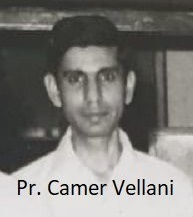
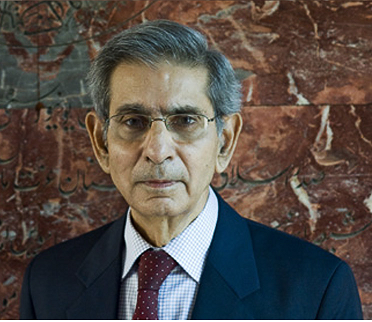
Who was this exceptional individual? He was Dr. Camer Vellani, the Associate Professor of Medical Unit-II at Civil Hospital, Karachi, who had recently migrated from the UK. It was said that he had been placed at Civil Hospital by the headquarters of His Highness Aga Khan to understand the dynamics of healthcare in Pakistan. There was talk that he would later lead medical services at the under-construction Aga Khan Hospital, which proved true.
For me, Dr. Vellani became a role model. I started admiring not only his clinical acumen but also his extraordinary courtesy towards patients, staff and the students. His concern for patients was unparalleled. His humility, gentleness, sincerity, and unwavering respect towards all patients was unbelievable. He treated the most underprivileged and the rich alike. Even the dirty, smelly patients were examined by him with similar details without any hesitation and given time as much as he would give to anyone from the elite class. I remember hearing the chowkidars (guards) at the OPD grumbling about the “mad Professor” who stayed alone in the OPD, seeing patients untill after 5 p.m., long after other staff had disappeared by 1 p.m.
Dr. Vellani’s dedication went beyond the call of his duty, as I have witnessed him giving bedpans to the patients in the ward when the lower cadre staff were unavailable and the patient had an urgent need for it. Has any medical personnel ever seen such a spectacle? One must realize that all patients in the ward were from low income groups, to whom most of the faculty members looked upon as objects of teaching and rarely ever touched them – how could they ever provide bedpan service to any patient?
Once, my brother’s friend Aamir Hussain asked me if there is any outstanding doctor in Civil Hospital. His younger brother, in his late 20s, had been suffering from persistent headaches that were unresponsive to treatment. He was seen by a leading medical specialist and a neurosurgeon of Karachi and both of them considered him to be a case of depression headaches, as headaches started six months after his marriage. The family was told that the young patient is probably unhappy with the marriage and has sunk in depression, which is causing these headaches. The patient and family strongly disagreed with their diagnosis but the specialists did not took out time to examine him in detail and maintained their stance. At that time, brain scan facility was not available in Pakistan and the diagnosis relied entirely on thorough physical examination, which was not done by any of the two specialists.
I recommended he see Dr. Vellani. After securing an appointment, Aamir Bhai took his brother to Dr. Vellani’s home on Tariq Road, where he saw only a few referred patients in the evening. They entered the consulting room of Dr. Vellani at 6.00 pm and came out at 8.30 pm with a diagnosis – a tumour in the pituitary fossa of the brain. The diagnosis was made through a meticulous clinical examination. I was amazed at the details of physical examination done, as I had not observed any of my teachers spending more than a few minutes in examining the patient.
Each clinical examination conducted and its finding was recorded in a long note, which exceeded more than twenty pages. This was a serious diagnosis and required immediate surgical intervention. Dr. Vellani gave them a referral letter for the neurosurgeon who had seen the patient earlier.
An early appointment with the neurosurgeon was arranged through special efforts. Unfortunately, the neurosurgeon dismissed the diagnosis of Dr. Vellani, tossed the long note into the trash in front of the family without reading it, and called Dr. Vellani a “crazy doctor” who over estimates his clinical skills. The neurosurgeon told the family that the patient does not have any brain tumour as he had no classical symptoms and signs associated with the brain tumour and reaffirmed his belief that it was simply depression that is causing headaches and the patient should be treated by a psychiatrist.
Sadly, the patient’s condition deteriorated over the next six months. The family tried spiritual, homeopathic and herbal treatments also, but nothing worked. As worsening continued, he developed most of the signs and symptoms of the brain tumour. The patient was again taken to a medical specialist who also referred him back to the same neurosurgeon, as he was considered the best in the city. At that point, the neurosurgeon agreed with the diagnosis of brain tumour and operated, but by then it was too late and the young man could not survive. The family and me often wondered if earlier intervention based on Dr. Vellani’s diagnosis might have saved him.
In another case, Dr. Vellani diagnosed a very tiny tumour, only a few mm size in the thyroid of a patient, just by palpation and referred the patient for the radioactive Iodine Scan to diagnose suspicious cancer. At that time, the scan was done only at the Jinnah Post Graduate Medical Center, where the Head of the Nuclear Medicine Department refused to believe that any doctor could ever palpate such a small tumour. But fortunately, to prove his point he agreed to do the scan and the tumour was detected. The patient received timely treatment and recovered well.
In a few years, Dr. Vellani left Civil Hospital and began leading the small medical team that led the foundation for the Aga Khan University Hospital (AKUH). I had graduated and was hired to initiate the outpatient services at the Filter Clinic, which was later named as the Community Health Center.
One Sunday morning, my mother complained of unusual chest pain on the back, which she was experiencing from several hours. She took some pain killers for it but had no relief. There were no other associated signs such as radiation to arm or nausea and vomiting. I called Dr. Vellani for advice and he told me to bring her to the AKUH, where he would meet us within 30 minutes.
The hospital was close to my home and we reached the AKUH within few minutes and he arrived soon. On arrival, Dr. Vellani examined her and also conducted the ECG himself, which revealed ischaemic changes indicating a mild heart attack.
At that time, only limited outpatient services were functioning at AKUH under my care, hence I inquired where to shift my mother. He in his usual calm and soft tone, said, “We will manage her here.” I was surprised on this response as the in-patient services of the hospital had not started functioning till then. He moved her to the area where ICU facilities were available and made the required arrangements. He himself set up the area for her care, which had the bed, monitors, oxygen facility, me as the attending doctor and nursing staff. The blood samples were sent to the laboratory for the tests and my mother was given the required medicines and oxygen. Dr. Vellani decided to leave when blood reports arrived and my mother’s chest pain settled.
The entire process from his arrival to departure took almost three hours. I walked down with him towards the parking area, discussing the prognosis of my mother, her treatment plan and to thank him for this very special favour to me. I was stunned, when I saw his wife and daughters sitting in the car. They were dressed up for an occasion and waiting for him. At that point I learned then that they were en route to a faculty member’s son’s wedding when Dr. Vellani stopped at the hospital to see my mother. I just could not believe as he neither mentioned the occasion nor expressed any urgency during the entire process of setting up the treatment facility for my mother. What was further more unbelievable was the calm, with which his family waited in the car for three hours.
In all my years in medicine, I have never encountered anyone with clinical skills or compassion comparable to Dr. Camer Vellani. There are many more examples of his clinical brilliance and humility towards the patients and their families, but I believe the above are enough to affirm that he has been an incomparable medical professional in Pakistan; and may be one of the few in the world.
I have always felt very blessed that my clinical training and understanding of patient care was by someone as extraordinary as Dr. Camer Vellani – a Messiah.
Dr. Arjumand Faisel MBBS, MCPS, MPH, FCPS is a leading Public Health Specialist in Pakistan. He graduated in 1979 from Dow Medical College and has served at the Aga Khan University, USAID/Islamabad and WHO/EMRO. He has been a Consultant for the World Bank, ADB, LSHTM and many other INGOs and NGOs for public health programmes.
A CONSEQUENTIAL LIFE
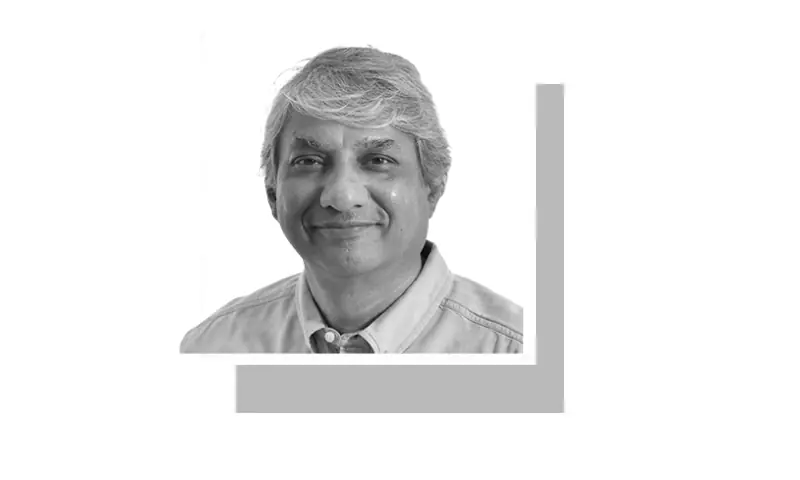
By Prof. Saad Shafqat
Professor of Neurology
Aga Khan University Hospital.
IN the summer of 1982, there was talk of a new medical college coming up in Karachi. It was to be Pakistan’s first such institution in the private sector and was being launched by a highly reputed enterprise, the Aga Khan Development Network. An imposing boundary wall along Stadium Road testified to this emerging reality. For prospective medical students like me, this was electrifying news. In those days Pakistan’s medical education landscape was in disarray because of politicised campuses, and the five-year MBBS programme was taking much longer.
Although there had been no official announcement, I made enquiries and came upon the name of a certain Dr Camer Vellani as the project’s central figure. The phone directory listed a number for his clinic, which I dialled one evening with apprehension and anticipation. When Dr Vellani came on the line and took me through the basics of the project, I was hooked. The following year, I was fortunate to be admitted to the Aga Khan University Medical College’s inaugural class, a group of 50 selected from an applicant pool of over 5,000.
The opening week included an orientation by Dr Vellani, who was associate dean. The moment he walked in, the room filled up with his quiet and dignified presence. A slender frame adorned with a scholarly bespectacled bearing, he spoke with a soft but commanding eloquence. After introductory remarks, he scribbled a searching question on the blackboard: “What am I doing here?” — emphasising each word one by one. A fundamental query was thus transformed into several, prodding us to self-reflect. You can judge the impact of that moment from the fact that it has stayed with my classmates and me ever since.
In 1985, when our clinical years began, we encountered Dr Vellani more often. He was founding chairman of the department of medicine and a decorated professor of medicine and cardiology. He taught us how to extract a systematic medical history and conduct an orderly physical examination. I happened to be one of the more excitable students in our class and would try Dr Vellani’s patience from time to time, but he never betrayed any irritation or annoyance. His method was steady gentlemanly persuasion conveyed with calmness and composure.
‘He made us want to be like him.’
Before long, we were all looking up to him not just as a teacher or mentor, but also as a father figure and a role model. We watched with rapt attention while he conducted his outpatient clinics, being unfailingly generous with his time and wisdom to both patients and students alike. We stood mesmerised at the bedside as he elicited challenging physical signs, such as a third or fourth heart sound or an abnormally robust pulsation in the jugular vein. We sat captivated as he elaborated on the biological aspects of heart failure or, his particular favourite, the physics of electrocardiography. The long and short of it is that we outright idolised him.
Our class graduated in 1988 and scattered to pursue advanced specialisation in our chosen fields. I spent a decade in the US and returned in 2000 to join the Aga Khan faculty as assistant professor of neurology. During this time Dr Vellani had served in a series of leadership roles, including a term as rector (equivalent to vice chancellor). He was revered as a medical statesman, combining the qualities of a master clinician, an impactful academic and a seasoned administrator in one inspiring and edifying persona. I went to his office to pay my respects and to apologise for having been rather a boisterous student. Dr Vellani would have none of it. He laughed a soft, gentle laugh and said “Saad, you never gave me any trouble.” Then, with a twinkle and an affectionate smile he added, “Well, perhaps just a little.” I was quickly reminded of the many reasons we had admired and adored him.
For the last few months, the word got out that Dr Vellani was unwell, triggering widespread concern across the institution. Early on the morning of Sept 4, he breathed his last; he was 88. His body may have weakened, but his mind remained sharp. A colleague who was with him in the final hours heard him express gratitude at having been granted a blessed life; perhaps he had a premonition that his time had come. Dr Vellani had exited with the same dignified elegance that had marked him throughout his long and rewarding life, a life of unmatched dedication and exemplary service. He helped and healed generations of sick patients, and motivated and inspired legions of medical students towards clinical excellence. He made us want to be like him. If the most consequential measure of a life is the sum of your good deeds, then Dr Vellani rests most comfortably and the rest of us stand enriched.
The writer is professor of neurology at Aga Khan University.
Published in Dawn, September 9th, 2025
